Living Well With Diabetes In A Care Home
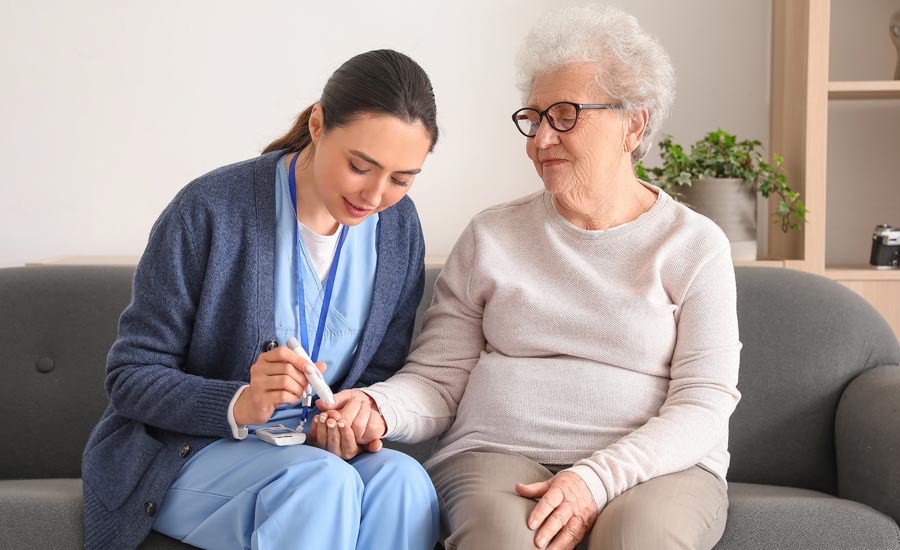
Around one in four care home residents are living with diabetes, according to Diabetes UK.
It is therefore a condition that care teams must regularly understand and support, particularly as diabetes management can become more complex with age.
If your elderly loved one has diabetes, understanding how their condition will be managed can be an important part of choosing a care home. Keep reading to learn how care homes support residents with diabetes, from medication and blood glucose monitoring to meals, hypos and maintaining independence.
How Do Care Homes Support Residents With Diabetes?
Residents living with diabetes in care homes are supported by following an individual diabetes care plan, providing appropriate support with medication and blood glucose monitoring, recognising signs of hypoglycaemia or hyperglycaemia and ensuring dietary and wider health needs are understood. Staff can also involve GPs and diabetes specialists when a resident’s condition or treatment needs to be reviewed.
Diabetes Training for Care Home Staff
Diabetes UK recommends appropriate diabetes training for care home staff, including recognising and responding to hypoglycaemia and understanding when changes in a resident’s health require further attention.
Carers also need to be familiar with the individual resident’s care plan.
For your loved one, this could include when medication is due, whether they need support checking their blood glucose and also what to do if a reading is outside the range advised by their healthcare team.
Training is especially important when a resident needs help managing their diabetes or has difficulty recognising and explaining their own symptoms.
Diabetes Care Plans Are Individual to Each Resident
Your loved one might control type 2 diabetes through diet and prescribed tablets, use insulin or have a more involved treatment plan. They may have managed their condition independently for decades and want to continue doing so. In other words, there isn’t one routine that every resident with diabetes follows.
All of this needs to be considered when planning their care.
A diabetes care plan will record medication and monitoring requirements, previous episodes of hypoglycaemia, dietary needs and guidance provided by your relative’s GP or diabetes team. It should also make clear what staff need to do if there is a problem.
Care plans need to be reviewed when circumstances related to their condition change. Because an illness, hospital stay, significant weight loss or problems eating can all affect diabetes management. The same applies if your loved one begins finding tasks they previously managed independently more difficult.
Our guide to what a care plan should include explains how care plans are used more widely to record and review a resident’s individual needs.
Recognising and Responding to a Hypo
Low blood glucose, known as hypoglycaemia or a hypo, can affect older residents in different ways. Some symptoms your loved one might experience include shaking, sweating, hunger or dizziness, but confusion, unusual tiredness and unsteadiness can also be signs that their blood glucose has dropped too low.
Care staff should know if your relative is prone to hypos and, importantly, how these usually affect them.
They can then use this information, which should be included in their diabetes care plan, alongside instructions for checking blood glucose, treating a hypo and knowing when further medical attention is required.
Severe hypoglycaemia can cause seizures or unconsciousness and needs urgent treatment, which is something a trained care team will act on immediately.
What Residents With Diabetes Eat in a Care Home
For many residents with diabetes, the focus will be on eating a balanced diet while considering how carbohydrates affect their blood glucose. Not only that, but ageing brings other nutritional considerations too. Your loved one may have a small appetite, be losing weight or need food adapted because they have difficulty chewing or swallowing.
This means restricting food unnecessarily can cause other problems of their own.
Diabetes UK highlights malnutrition as a concern among older adults in care homes and advises that dietary restrictions may need reconsidering when a resident is frail or at risk of undernutrition.
Meals should therefore reflect the resident in front of the kitchen team. A relative who needs support maintaining their weight has different nutritional priorities from a resident who has been advised to lose weight as part of managing type 2 diabetes.
This is also why special diets in care homes need to account for medical requirements without removing choice and enjoyment from mealtimes.
And yes, your loved one can still have pudding!
Living with diabetes does not necessarily mean desserts, birthday cake or favourite foods disappear from the menu.
What is appropriate depends on your relative’s individual diabetes management and dietary advice. Portion sizes, the rest of the meal and how frequently particular foods are eaten may all be relevant.
If your loved one already has established routines around food and diabetes that are working well for them, sharing these with their care team when they move into the home can give staff useful information from the beginning, ensuring they remain healthy whilst still enjoying the foods they love.
Managing Diabetes Medication in a Care Home
Diabetes medication is typically time-sensitive, particularly when insulin or certain medicines need to be coordinated with meals. Care staff will always follow the instructions set out for each resident, including when medication should be given and any required blood glucose checks.
If your loved one uses insulin and needs assistance when taking it, this should be provided by staff who have received the appropriate diabetes training and are assessed as competent to do so.
Changes in appetite or illness can sometimes affect diabetes management too. So, if your relative stops eating like they normally do, becomes unwell or their blood glucose readings are causing concern, staff can seek advice from their GP or specialist diabetes team rather than making changes to prescribed treatment themselves.
How Carers Keep Up With Diabetes Health Checks
Moving into a care home should never interrupt the regular health checks your loved one already has for diabetes.
This includes diabetic eye screening where eligible, along with checks of blood pressure, kidney function and HbA1c, which shows average blood glucose levels over the previous two to three months.
It is also worth paying close attention to foot health. Because diabetes can cause reduced sensation, your relative might not immediately feel a blister, cut or sore. If they can no longer check their feet easily themselves, staff can keep an eye out for problems and arrange further attention when needed.
Care staff can also help residents attend external appointments and make sure any new advice or treatment is reflected in their ongoing care.
Staying Active in Care Homes With Diabetes
Regular movement supports blood glucose management, particularly for residents living with type 2 diabetes. And it can also support strength and mobility as your loved one gets older, which is equally as important.
But staying active in a care home does not have to mean a formal exercise class.
A walk around the garden
A short walk outside adds natural movement to the day and can be adapted to your relative’s mobility.
Activities that get residents moving
Dancing, gardening and games that involve movement can all count towards staying active.
Seated exercise
For residents with limited mobility, chair-based exercises can offer another way to keep moving without needing to stand for long periods.
Continuing existing routines
If your loved one already enjoys walking or another activity, moving into residential care does not mean they have to give it up. Where it remains safe and appropriate, familiar activities can continue to be part of their week.
Keeping Diabetes Care on Track
Diabetes may need daily management, but it definitely shouldn’t prevent your loved one from enjoying their meals, activities, family visits and the routines that are important to them.
Good communication between families, care staff and healthcare professionals can make managing the condition much easier.
Families can share useful details about established routines and prior hypos, while staff can keep care plans up to date and seek medical advice as needs change.
And as mentioned earlier, as your relative gets older, their diabetes care may need to change too.
Regular reviews by a trained care team ensure your loved one’s diabetes medication, diet and level of support remain appropriate while helping them maintain as much independence as possible.
Ready to explore...