How Smart Monitoring Improves Safety in Care Homes
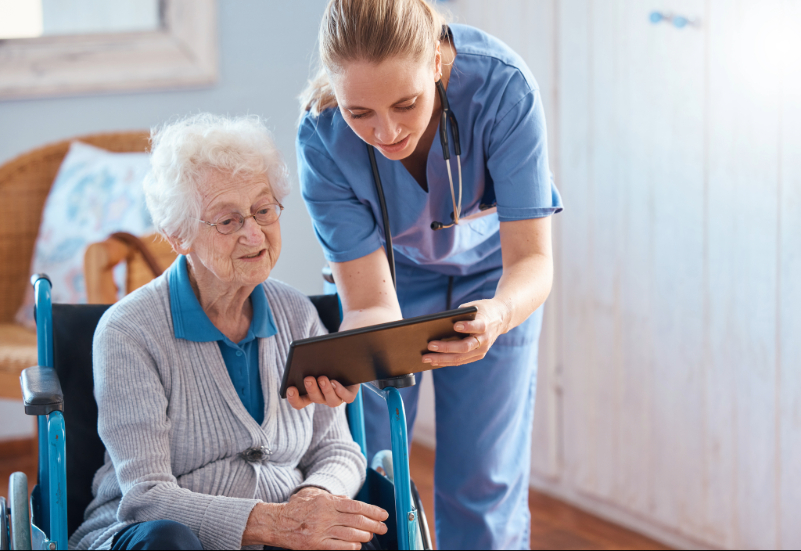
Keeping residents safe is one of the main responsibilities in any care home.
Fortunately, we live in a time where technology is making life easier for both residents and staff, helping them spot problems sooner, respond more quickly and spend less time on routine rounds.
In this article, we examine how this type of technology is enhancing safety and why more care homes are opting to utilise it.
How Do Sensors and Alarms Protect Residents in Care Homes?
Sensors and alarms support residents by picking up on moments that suggest they might need help. A sensor might notice a resident becoming unsteady when they stand or react when they get up at a time that doesn’t match their usual routine. Some systems keep an eye on the room and respond if conditions become unsafe. They can also notice shifts in a resident’s day-to-day behaviour that could mean they’re feeling unwell. When anything out of the ordinary stands out, care staff receive a prompt so they can check in and make sure the resident is safe, sooner rather than later.
The Practical Value of Smart Monitoring for Care Teams
It goes without saying that there are some days when care home staff are stretched thin. So utilising smart monitoring gives them better, more helpful information when it matters.
For instance, when a sensor detects that a resident has been in the bathroom for 25 minutes, a care assistant receives an alert to check on them before a fall occurs, not after, when it starts to escalate their health issues.
Traditional care rounds happen at set intervals, but falls and wandering don’t follow a schedule.
Luckily, a motion sensor can pick up unusual movement at 3am, showing when a resident hasn’t returned to bed after getting up. Staff have fast intel and can respond to what’s actually happening at the moment.
In practice, a care worker receives an alert within minutes, rather than discovering a resident on the floor during the next scheduled check. Door sensors show exactly where someone with dementia has gone instead of staff searching multiple rooms. A resident’s sleep data shows that they have been getting up six times a night for the past week. Instead of staff guessing whether their patterns have changed, this information leads to better diagnosis and care plans.
Another positive aspect of smart monitoring in care homes is that handovers between shifts improve, too. Incoming staff see overnight activity summaries, unusual events and emerging patterns, instead of relying purely on notes and memory, which gives a fuller picture of what has been happening to keep things ticking over smoothly.
Preventing Falls With Real-Time Alerts
Falls in care homes typically happen when an elderly resident tries to stand or change position without feeling fully steady. The fact of the matter is that staff can’t be in every room at once, so that’s where real-time monitoring helps. Bed and chair sensors pick up when a resident is starting to get up or moving in a way that could lead to a fall and when that happens, the system sends an alert straight away so a member of the team can get to them and check in quickly.
The benefit is practical where staff don’t have to rely on routine rounds or guesswork to manage care. They’re told when someone may need support and they can act straight away, which can reduce harm to the resident and give more reassurance to family members.
Homes that use these systems often see faster response times and fewer incidents that go unnoticed.
They give carers an earlier signal so they can be in the right place at the right moment which, for residents, often means avoiding a fall altogether or reducing the impact when one does happen.
Ready to explore...
Protecting Residents With Dementia
Dementia care homes need to be hyper aware of risks from moments that seem small, such as leaving a room, walking into the wrong area or becoming unsettled at night. While these aren’t emergencies in themselves, they can quickly lead to situations that are harder to manage if they go unnoticed.
Some homes also use RFID-based wander management systems, which trigger an alert when a resident wearing a small wrist tag moves beyond a safe boundary without setting off loud alarms that might cause distress.
In communal areas, motion sensors can flag movement during quiet hours, helping staff notice when someone is up and unsettled.
For seated residents, chair pressure pads notify staff when someone stands, which is extremely helpful all around when supervision isn’t constant.
The purpose of this technology is to give staff early signals that allow for a calm, timely response, meaning residents are less likely to reach unsafe areas without support and staff aren’t relying solely on visual checks or call buttons to know when someone might need help.
Ethical Considerations and Resident Dignity
Using monitoring technology in care homes raises important ethical questions. It’s there to improve safety, but it also means collecting information about how people move, behave and live day to day and that needs to be handled with care.
Wherever possible, residents should know what’s being monitored and why, but when a resident can’t give informed consent, families or legal representatives need to be involved.
These decisions should be reviewed regularly, especially if needs or circumstances change.
Technology in care homes is there to support and increase the quality of care, not to replace it completely. Tools that track movement or alert staff quietly in the background can be helpful but they should never take the place of real connection or human judgement. Just because something is possible to monitor doesn’t always mean it’s the right thing to do.
The priority should always stay on the resident. Dignity means feeling safe, but also respected and good care finds the right balance between both.
Making Technology Work for Care
Smart monitoring is already part of daily life in many care homes. It gives staff better visibility, which reduces risk and creates more time for meaningful face-to-face care.
When used properly, technology can keep routines safe without taking away independence or privacy.
What matters most is how monitoring is used. When it’s thoughtful and person-centred, it has the potential to make everyday care safer, calmer and more responsive, which improves residents’ well-being and overall quality of life in the care home.
Ready to explore...